The hidden tax on software teams isn’t bad code, it’s context switching. Engineers lose an average of 23 minutes recovering focus after each interruption, and when your typical workflow spans Jira for tickets, GitHub for code, Slack for chat, Confluence for docs, and a CI dashboard for builds, those interruptions add up quickly.
Consolidating planning, code workflows, and communication into as few systems as possible isn’t just a nice-to-have; it is essential for maintaining velocity. Every additional tool a team member must check adds cognitive overhead, delays decisions, and scatters information across the wrong places.
A typical stack in 2026 might look like this:
|
Layer |
Common Tools |
Purpose |
|
Work planning |
Jira, Linear, Shortcut |
Source of truth for all tasks and epics |
|
Code & review |
GitHub, GitLab |
Version control, PR workflows, code ownership |
|
CI/CD |
GitHub Actions, CircleCI, GitLab CI |
Automated testing, deployment gates |
|
Real-time collaboration |
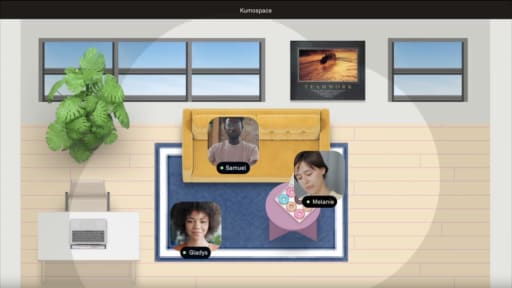
Kumospace |
Virtual office for syncs, pairing, war rooms |
|
Async communication |
Slack, Teams |
Quick questions, notifications, channels |
The key principle is to choose a source of truth for work items and enforce “if it’s not on the board, it doesn’t exist.” When someone asks about project progress in Slack, the answer should be “check the board” rather than a lengthy explanation that lives nowhere permanently.
Maximize delivery ROI for software projects
When we talk about ROI for software projects, we mean shipped features that users actually adopt and reduced rework, not lines of code or story points completed. A team that ships 200 story points of features nobody uses delivers zero ROI.
Here are the concrete levers that drive real delivery ROI in 2026:
- Ruthless backlog prioritization: Apply frameworks like RICE (Reach, Impact, Confidence, Effort) to score every major initiative. If a feature doesn’t connect to a 2026 business goal, it shouldn’t be in the current quarter’s roadmap.
- Limit work in progress: Teams that cap WIP at 2–3 items per developer finish faster than teams with 10 items each “in progress.” Use your project management software to visualize and enforce these limits.
- Minimize handoffs: Every handoff between design, frontend, backend, and QA introduces delay and information loss. Cross-functional pairs or small squads reduce these handoffs dramatically.
- Feature flags and canary releases: Validate ideas with 5% of traffic before committing to full rollouts. This generates ROI data quickly and minimizes the cost of wrong bets.
Release war rooms work: For big releases, create a dedicated Kumospace room where devs, QA, and product can coordinate in real time.
Drive better engineering outcomes with data
Good team management uses a small set of engineering metrics, not vanity dashboards with 47 charts nobody reviews. The goal is to understand flow and customer impact, not to surveil team members.
The metrics that matter in 2026 industry practice:
|
Metric |
What it measures |
Target (high-performing teams) |
|
Deployment frequency |
How often you ship to production |
>1 per day |
|
Lead time for changes |
Time from commit to production |
<1 day |
|
Mean time to recovery (MTTR) |
How fast you fix incidents |
<1 hour |
|
Change failure rate |
% of deployments causing incidents |
<5% |
|
PR cycle time |
Time from PR open to merge |
<24 hours |
Avoid micromanaging through lines of code or hours online. Research consistently shows that surveilled environments see 40 percent productivity drops, and you risk losing your best engineers who have other options.
Monthly metrics ritual: Establish a lightweight monthly review where the entire team inspects these metrics together and chooses one bottleneck to improve. For example, if PR cycle time is stretching to three days, that becomes the focus for the next month.

One of the most common gaps in software organizations is the disconnect between executive strategy and daily development tasks. Leadership may say “increase self-serve revenue by 30% in 2026,” but engineers often spend their days on tickets that seem unrelated.
Visible goal-setting bridges this gap. Whether you use OKRs, North Star metrics, or outcome-focused roadmaps, the key is mapping high-level goals directly to the epics and features your team builds.
Quarterly planning rituals: At the start of each quarter, bring engineering, product, and design together to agree on 3–5 concrete outcomes, not a wishlist of 50 features. Outcomes should be measurable, such as “reduce checkout abandonment by 15%” rather than “improve checkout flow.”
Connect daily work to company goals
Every epic or major story should map to a 2026 company goal. If you can’t articulate how a feature connects to “reduce churn in SMB customers by 5%” or “lower infrastructure spend by 10%,” question whether it belongs in this quarter.
Practical implementation:
- Add goal tags or labels to your issue tracker (e.g., goal:reduce-churn, goal:self-serve)
- Create a quarterly goal board showing which initiatives support each goal
- Maintain a 1-page narrative document explaining this quarter’s focus and why
- Reference goals during sprint planning: “This story supports our churn reduction goal because…”
- Review goal alignment during retrospectives: “Did our shipped features actually impact the metric?”
Monthly goal review: Host a short monthly gathering in Kumospace for remote teams where squads demo shipped features and tie them back to metrics
Foster collaboration in distributed software teams
Effective collaboration in this environment requires a thoughtful balance between synchronous and asynchronous work.
|
Collaboration type |
Best for |
Examples |
|
Synchronous |
Real-time problem solving, incidents, pairing |
Pair programming, incident response, sprint planning |
|
Asynchronous |
Deep work, review, documentation |
PR reviews, RFCs, design docs, recorded demos |

By 2024–2026, AI coding assistants have moved from novelty to standard tooling. Most teams use some combination of GitHub Copilot, Claude, or similar tools for code generation. This changes management expectations significantly.
Set explicit norms for AI usage:
- Where AI-generated code is allowed (prototypes, tests, boilerplate) vs. requires extra review (security-sensitive, production-critical)
- Required review levels for AI-assisted code (same as human-written? Additional scrutiny?)
- Security and licensing considerations (don’t paste proprietary code into public AI tools)
Encourage AI for:
- Boilerplate code and scaffolding
- Unit test generation
- Basic refactors (renaming, extracting functions)
- PR summaries and documentation drafts
- First-pass code review comments
Managers can use AI too:
- Summarizing sprint updates for stakeholder reports
- Generating status reports from ticket data
- Clustering bug reports to identify patterns
- Suggesting roadmap themes based on customer feedback
Watch for pitfalls:
- Junior devs over-relying on AI without understanding the generated code
- Hidden bugs that look plausible but fail edge cases
- Knowledge erosion as engineers skip learning fundamentals
- Security vulnerabilities in AI-suggested code
Counteract these by investing in code review discipline. Treat AI-generated code as untrusted by default; it requires the same scrutiny as code from a new junior hire who hasn’t earned trust yet.
Practical AI workflows for software teams
Here are specific workflows teams are implementing successfully in 2026:
- AI-assisted unit test generation: After writing a function, ask the AI to generate edge case tests. Review and adjust, but you’ve saved 30 minutes of boilerplate.
- AI-drafted RFC outlines: Starting a technical design document? Feed the problem statement to AI and get a structured outline with sections to fill in.
- AI-based triage of incoming bugs: Use AI to categorize bug reports by component, suggest severity based on error patterns, and link to similar past issues.
- AI comment suggestions on PRs: Let AI provide first-pass review comments, then senior engineers can focus on architecture and business logic concerns.
Explicit policy: Document in your team wiki that AI-generated code must be treated as untrusted until reviewed and tested. This isn’t about distrust; it’s about maintaining quality standards regardless of code origin.
Share learnings: Host weekly “engineering lab” sessions in Kumospace where team members share useful AI prompts and workflows. One engineer’s discovery of an effective prompt can save the entire team hours.
Track impact: Compare your 2023 metrics (before heavy AI adoption) to 2026 metrics. Is lead time actually improving? Is quality maintained? Let data guide your AI integration strategy rather than hype.

You don’t need to overhaul everything at once. Start with a focused 30-day plan to build momentum and demonstrate results.
Week 1: Clarify goals and intake
- Document your team’s top 3 goals for the quarter and how current work supports them
- Establish a single intake channel for requests (form, service desk, or designated Slack channel)
- Hold your first triage meeting with product to classify the backlog
Week 2: Clean up workflows and automation
- Identify one manual workflow to automate (auto-assign reviewers, required CI checks, preview environments)
- Implement the automation and communicate the change to the team
- Audit your tool stack; can you consolidate any overlapping tools?
Week 3: Improve collaboration rhythms
- Set up a Kumospace virtual office space for your team
- Establish core hours for synchronous collaboration
- Document async-first practices (how to write good PR descriptions, where to post updates)
- Try one “office hours” session where stakeholders can drop in with questions
Week 4: Introduce metrics and a small AI pilot
- Capture baseline metrics: deployment frequency, lead time, PR cycle time
- Choose one AI workflow to pilot (test generation, PR summaries, bug triage)
- Set up a dashboard the whole team can see
Day 30: Retrospective
Hold a 60-minute retrospective (in Kumospace if you’re remote) to review:
- What has improved? (Reference your metrics)
- What was harder than expected?
- What should we continue, stop, or start?
- What’s our next 30-day focus?
Success criteria: Pick 1–2 metrics as your north star. If your lead time dropped from 3 days to 1.5 days, that’s concrete progress worth celebrating and building on.