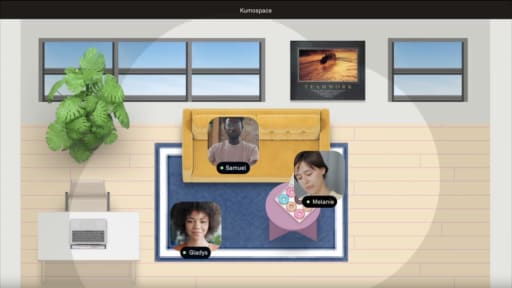
Most organizations reuse a core set of 7 to 8 proven meeting room layouts, each optimized for different purposes. Rather than reinventing the wheel, you can select from these established configurations and adapt them to your specific needs.
This section covers:
- Boardroom Style
- U-Shape Style
- Hollow Square (Box) Style
- Classroom Style
- Theater/Auditorium Style
- Banquet Style
- Cabaret Style
- Standing/Huddle Style
For each layout, we’ll cover ideal room dimensions, recommended participant counts, best-fit meeting types, and basic AV setup. We’ll also explain how to extend each configuration into a hybrid experience using virtual platforms like Kumospace.
Boardroom Style
Boardroom style features a central rectangular or oval conference table with 6 to 20 chairs surrounding it. This is the classic executive setup you’ll find in leadership suites and client-facing spaces.
Typical dimensions:
- 12’ x 18’ room for 10–12 people
- 10’ conference table length
- Minimum 48” clearance on all sides for chair movement
Best uses:
- Quarterly leadership reviews
- 2026 strategic planning sessions
- Investor presentations
- High-stakes negotiations and executive meetings
- Formal meetings requiring face-to-face discussion
Recommended conference room equipment:
- Dual 65”+ front displays for content and video conferencing
- Center-of-table microphone array for quality audio pickup
- 4K camera at eye level for natural video meetings
- One-touch join system for hybrid calls
Kumospace integration: Create a virtual Boardroom with a long digital table, named seats for executives, and shared screen zones at one end. Remote participants appear as avatars seated at the table, maintaining the sense of equal participation.
U-Shape Style
U-shape style arranges three table rows in a horseshoe configuration, open on one side for the presenter. This seats 12 to 25 people facing inward and toward the front, encouraging group discussions while maintaining a clear focal point.
Typical dimensions:
- Minimum 18’ length and 16’ width
- 30” width per seat
- Comfortable circulation space behind participants for facilitator movement
Best uses:
- Interactive training sessions
- Sales kickoffs
- Product demos requiring audience engagement
- Workshops with facilitator movement such as a 2026 onboarding cohort of 18 new hires
Recommended AV setup:
- Large display or LED wall at the open end
- Boundary microphones along the tables
- Wide-angle camera centered opposite the opening to capture all meeting participants
Kumospace integration: Create a virtual seating arc where remote attendees appear “in the horseshoe” with the facilitator at the open end. This preserves the interactive dynamic even for distributed teams.
Hollow Square (Box) Style
Hollow square style places tables arranged in a closed square or rectangle with an open center. This typically seats 16 to 32 participants, all facing inward with equal sightlines to each other.
Typical dimensions:
- 20’ x 24’ room with four table segments
- Wide walkways around the exterior
- Open space in the center for displays or facilitator access
Best uses:
- Cross-functional project teams
- Steering committee meetings
- Recurring 2026 program reviews where everyone needs equal voice
- Decision-making sessions requiring balanced participation
Limitations: Less optimal for front-focused presentations because many participants have side-facing views of any screen. Best suited for group interaction rather than one-way information delivery.
Kumospace integration: Design a virtual “Square Table” area where every participant’s avatar is equally spaced and labeled, reinforcing equal participation. The symmetry signals that no single position holds more authority than another.
Classroom Style

Classroom style uses rows of tables with chairs all facing the front of the room, supporting note-taking and laptop use. It’s a workhorse layout for any session where participants need to absorb information and take notes.
Spacing guidelines:
- 60” between table rows
- 24”–30” width per seat
- Center aisle for instructor movement
Best uses:
- Compliance training sessions
- Product enablement workshops
- External certification courses
- Sessions with 20–40 people focused on learning
Recommended AV setup:
- Dual front displays or single large projector screen
- Ceiling speakers for even audio distribution
- Tracking camera that follows the presenter
- Interactive whiteboard for real-time collaboration
Seating capacity trade-off: The same room that holds 100 in theater style might only seat 60–80 in classroom layout due to table space requirements.
Kumospace integration: Create a Virtual Classroom where each row is represented as a virtual row and the instructor shares their screen at the virtual front. Breakout features let you split into small group discussions and reconvene.
Theater / Auditorium Style
Theater style arranges rows of chairs without tables facing a stage or front wall, maximizing seating capacity for large audiences of 50–250+ people depending on room size.
Sightline recommendations:
- Staggered seating so heads don’t block views
- Moderate rake (incline) if available
- Last row should comfortably see a 120”+ projected image
Best uses:
- Company all-hands
- 2026 town halls
- Executive AMAs
- Product launch events
- Awards ceremonies
Recommended AV setup:
- Stage lighting for presenters
- Multiple ceiling or line-array speakers
- At least one confidence monitor
- Roaming wireless microphones for audience questions
Capacity advantage: Theater typically yields the highest capacity per square foot. A room of roughly 1,000 square feet might hold 80 to 100 people in a theater layout versus 50 to 70 in a classroom setup.
Kumospace integration: Host a mirrored auditorium where all remote participants face a virtual stage, with screen sharing and spatial audio simulating front-of-house sound. This creates a cohesive experience for video conferences with large distributed teams.
Banquet Style
Banquet style uses round tables (typically 60” or 72” diameter) seating 6–10 people each, spread evenly across the room. Participants sit on all sides of each table.
Practical setup tips:
- Minimum 72” between table edges for server circulation
- Clear paths to exits and restrooms
- Easy access for catering and service staff
Best uses:
- Company holiday dinners
- Mid-year award nights
- Fundraising galas
- Partner networking events
- Casual meetings with food service
Recommended AV setup:
- Distributed speakers for even sound coverage
- One or two projection screens visible from most tables
- Small stage for hosts or MCs
- Handheld wireless microphones
Kumospace integration: Design a “Banquet Hall” scene with virtual tables matching in-person table numbers. Remote guests can join specific groups or sponsor tables, encouraging group interaction across physical and virtual spaces.
Cabaret Style

Cabaret style uses round tables with six to eight chairs surrounding them, but only two thirds of the circumference is occupied so everyone faces the stage or main display. This hybrid approach combines presentation viewing with small group interaction.
Layout guidance:
- Align the open side of each table toward the front
- Leave enough space for facilitators to walk between tables
- Position screens so no participant has to turn completely around
Best uses:
- Half-day workshops
- Innovation labs
- Conference breakout sessions
- Sessions alternating between presentation and small group discussions
Recommended AV setup:
- Front displays visible from all tables
- Handheld microphones for table reports
- Wireless presentation for rotating speakers
- Distributed audio so tables can hear clearly without straining
Kumospace integration: Design a cabaret-style “Workshop Room” with labeled tables, such as Table 1 and Table 2, where hybrid teams can break out for small group discussions and then reconvene for share-outs.
Standing / Huddle Style
Standing meetings are short, informal gatherings around a whiteboard, screen, or high table, typically lasting 10 to 15 minutes. No one sits down, which naturally keeps discussions focused.
Examples:
- Daily scrum standups at 9:00 a.m.
- Quick deal reviews
- 2026 incident response huddles
- Informal discussions that don’t need a formal meeting room
Minimal furniture requirements:
- Mobile whiteboard
- One or two bar-height tables
- Single display with camera and soundbar
- Open space for 4–8 people to gather
Productivity benefits:
- Shorter meetings
- Higher energy levels
- Quicker decision cycles
- Reduced scheduling friction
Kumospace integration: Create a designated “Standup Corner” in your virtual office where team members can gather for quick huddles. The spatial audio ensures you only hear people nearby, mimicking the ad-hoc nature of physical standups.

Conference room design extends beyond chairs and screens. It encompasses space planning, comfort, lighting, acoustics, and the integration of physical and virtual elements.
Good design considers:
- How people move through the space
- Where focal points draw attention
- How sound behaves in the room
- What technology needs to be accessible
The following subsections provide concrete guidelines for creating effective meeting spaces in 2026.
Space Planning Fundamentals
Clearance requirements:
- Minimum 48” circulation around tables
- 56” preferred in heavily used rooms and larger spaces
- 30” width per seat at conference tables
Ceiling height considerations:
- 9’ standard for most conference rooms
- 10’–12’ for large conference rooms to improve acoustics and accommodate larger displays
- Taller ceilings help sound disperse naturally and prevent echo
When planning room size, remember that adding tables always reduces headcount. Theater style maximizes capacity; boardroom style prioritizes interaction over density.
Chair selection for meetings over 60 minutes:
- Ergonomic furniture with adjustable height
- Lumbar support for extended sessions
- Quiet casters that don’t disrupt audio
- Armrests that fit under table size constraints
Storage and accessories:
- Sideboards or credenzas for HDMI adapters, spare microphones, and printed meeting materials
- Cable management built into tables for clean appearance
- Charging stations accessible from seating positions
Safety essentials:
- Clear paths to doors and emergency exits
- Avoid placing chairs backed directly into doors or AV racks
- Maintain required aisle widths for fire code compliance
Environmental Design: Lighting, Acoustics, and Comfort
Lighting recommendations:
- Even front lighting on faces for video meetings, avoiding harsh shadows
- Dimmable fixtures for presentations requiring screen focus
- Avoid strong backlighting from windows directly behind speakers
- Position cameras so glass walls do not create glare or reflections
Acoustic treatments:
- Wall panels to absorb sound and reduce echo
- Carpeting instead of hard floors in larger rooms
- Acoustic ceiling tiles, especially in glass-heavy modern offices
- Consider sound masking in open-plan adjacent areas
Comfort ranges for productive meetings:
- Room temperature between 68 and 72°F
- Adequate ventilation and CO₂ management for long sessions
- Humidity control to prevent dry air discomfort
Aesthetic touches:
- Plants and greenery to support focus and reduce stress
- Neutral or muted color palettes for most meeting spaces
- Reserve bright accent colors for creative rooms or innovation labs

Many organizations in 2026 operate a mix of physical conference rooms and always-on virtual spaces using platforms like Kumospace. This hybrid approach ensures remote participants are not second-class attendees.
Mapping physical to virtual rooms:
- Use the same names (e.g., “Hudson Boardroom” in both physical and virtual spaces)
- Create similar layouts with designated virtual “tables” corresponding to real-world seating zones
- Maintain consistent room design metaphors across environments
Example scenario: A marketing team holds a monthly planning meeting with 10 people in a physical boardroom and 5 remote participants joining via Kumospace. The virtual room shows a boardroom table labeled “Marketing West” with avatar seats matching the physical arrangement. Remote attendees can see who is sitting where and participate in side conversations during breaks.
Benefits of this approach:
- Persistent shared context: Teams maintain a virtual “home base” even when not in physical rooms
- Informal conversations: Pre- and post-meeting chat happens naturally, like walking to a conference room together
- Overflow capacity: When physical room capacity is exceeded, additional participants join virtually without feeling excluded
- Real-time collaboration: Shared whiteboards and documents are accessible to all participants regardless of location
Spatial audio advantages: Kumospace’s spatial audio means moving closer to someone makes their voice louder, enabling the kind of small group interaction and side conversations that physical reception or cabaret setups naturally create, something traditional video conferencing grids cannot replicate.