Businesses in 2026 face an increasingly complex risk landscape. Cloud outages, AI system failures, geopolitical supply chain disruptions, pandemic variants, and extreme weather events do not happen in isolation; they compound and intersect. A company that loses its primary cloud region during a heat wave while key personnel are stuck at home due to a transit strike needs more than quick thinking. It needs a plan.
Faster response times represent one of the most tangible benefits of contingency planning. When your team does not have to debate what to do, who is in charge, or how to communicate, you measure response in minutes instead of hours. A written plan eliminates the paralysis that occurs when unexpected events catch people off guard.
Lower financial losses follow naturally from faster responses. Every hour of downtime, missed customer communication, and delayed decision has a cost. Organizations with effective contingency plans consistently report reduced operational and revenue impact during disruptions.
Stronger customer trust comes from visible competence during crises. Customers who receive clear, timely updates during an incident, even a serious one, often report higher satisfaction than customers who never experienced a problem. Your contingency plan’s communication protocol directly shapes this perception.
Better regulatory compliance matters in an increasing number of industries. Financial institutions follow FFIEC guidance requiring tested contingency funding plans. Healthcare organizations must demonstrate HIPAA-compliant incident response. Companies seeking ISO 22301 certification need documented business continuity procedures. Having plans is not optional in these contexts.
Consider this scenario: It is Black Friday 2026, and a regional power outage takes down your e-commerce platform’s primary data center for six hours. A company without a contingency plan scrambles to figure out failover procedures, argues about who should talk to customers, and eventually loses an estimated $2M in sales. A company with a plan activates automatic traffic routing to a secondary region within 15 minutes, posts status updates every 30 minutes, and recovers 85 percent of potential revenue through extended promotions the following week.
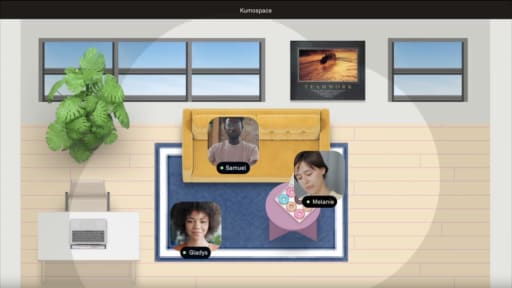
For distributed and hybrid teams, tools like Kumospace make contingency execution practical. When you need to gather the right people instantly in a virtual war room, regardless of where they are physically located, having a persistent digital workspace means your incident response team can assemble in minutes, not hours.

Organizations rarely have just one contingency plan. They maintain a library covering different risk categories relevant to their operations. A tech company might have plans for production outages, data breaches, and key personnel departures, while a retail chain adds supply chain disruptions, facility closures, and payment system failures.
The following examples show what realistic contingency plans look like across different scenarios. Each includes specific triggers, initial response actions, and how teams coordinate, particularly when they cannot gather in a physical conference room.
Cybersecurity Incident Contingency Plan
In March 2026, a SaaS startup’s security monitoring tools detect ransomware activity on its European data center overnight. By the time the on-call engineer confirms the breach, customer data access has been encrypted across three production databases.
Their contingency plan kicks in immediately. The first step is isolation: affected systems are disconnected from the network within 20 minutes to prevent spread. Customer traffic is automatically rerouted to the clean US-East region, triggering slightly degraded performance but maintaining service availability.
The plan designates the CTO as incident commander for all security events. She activates the response team via automated SMS alerts and opens the secure Kumospace room labeled “Security Incident – Do Not Disturb” for status updates and task assignment. Only the incident response team has access, while general staff receive separate updates through the all-hands channel to avoid confusion and rumor-spreading.
GDPR requires notification to affected EU customers within 72 hours. Because the plan includes pre-drafted notification templates and a clear approval workflow, the legal and customer success teams can prepare communications in parallel with the technical investigation. Without the plan, meeting this regulatory deadline would be nearly impossible while also managing the active incident.
The difference between panic and preplanned steps is stark. The startup recovers full service within 18 hours and completes customer notification at the 48-hour mark, well within regulatory requirements.
Supply Chain & Operations Contingency Plan
A consumer electronics company depends heavily on components from a single manufacturer in Taiwan. In September 2026, a typhoon damages the supplier’s primary facility, halting production for an estimated six weeks right before the critical Q4 holiday season.
Their supply chain contingency plan includes pre-approved relationships with secondary suppliers in Vietnam and Mexico. While these alternatives cost 15 percent more per unit and require longer lead times, the contracts are already negotiated and ready to activate. Flexible shipping routes via both Los Angeles and Houston ports provide options depending on which secondary supplier can deliver fastest.
Operations leadership makes immediate triage decisions. High-margin product lines get priority for available components, while lower-priority SKUs are paused for Q4 2026. The sales team is briefed within 24 hours on revised availability so they can manage customer expectations rather than overpromise.
Cross-functional leaders from operations, finance, and sales meet daily in a Kumospace “Supply Chain War Room” until stock levels stabilize. The persistent virtual space means the CFO can drop in from London, the VP of Sales can join from Chicago, and the operations director can participate from the company’s Taiwan office, all without scheduling chaos.
Within three weeks, alternative supply lines are fully operational. The company loses an estimated 20 percent of potential Q4 revenue, painful but far better than the 60 percent loss projected without a contingency plan.
People & Workforce Contingency Plan
A digital agency with 40 employees faces a crisis two weeks before a major client launch scheduled for May 15, 2026. Their lead backend engineer, the only person with deep knowledge of the custom integration architecture, accepts a surprise offer from a competitor and gives two weeks' notice.
Their workforce contingency plan defines exactly how to handle key personnel departures for critical projects. The plan names two backup owners with partial knowledge of the systems, references pre-documented code standards and architecture decisions, and includes agreements with two vetted contractors available on 48-hour notice.
Project managers use a standing Kumospace room to redistribute workload across the remaining engineering team. The backup owners each take responsibility for specific components while a contractor is brought in to handle less specialized tasks. Client briefings happen in the same virtual space, providing transparency about the situation and revised timeline.
The knowledge transfer process defined in the plan captures as much information as possible during the departing engineer’s final two weeks. Cross-training schedules, which the plan mandated but the team had been inconsistent about, prove invaluable. The project launches on May 22, one week late, but with full functionality and no critical bugs.
Key elements that made this work are documented code standards, a pre-vetted talent bench, and clear procedures for rapid onboarding. Vague advice like “be flexible” does not help when you are staring down a two-week deadline with your critical engineer walking out the door.
Financial & Cash Flow Contingency Plan
A B2B SaaS company misses two large enterprise renewals in Q3 2026. Together, these accounts represented 20 percent of quarterly revenue. The finance team realizes in early September that they will miss targets significantly.
Their financial contingency plan includes tiered responses based on severity. For a 10-15 percent shortfall, they implement hiring freezes and pause non-essential marketing spend. For shortfalls above 15 percent, additional measures activate, including salary review delays, vendor contract renegotiations, and potential headcount reductions.
The 20 percent shortfall triggers the more aggressive tier. Within 48 hours of confirming the lost renewals, a company-wide hiring freeze takes effect. The marketing team shifts budget from brand awareness campaigns to high-ROI channels with faster payback periods.
Predefined options outlined in the plan include tapping a revolving credit facility negotiated 18 months earlier specifically for contingencies, renegotiating payment terms with their three largest vendors, and adjusting pricing for new customers to prioritize cash over growth.
Leadership uses a recurring Kumospace “Finance Standup” space to monitor KPIs and decide whether to escalate to the next tier of the plan. They set checkpoint dates: if MRR does not show a recovery trajectory by November 1, 2026, they will implement the headcount reduction option.
By late October, two new enterprise deals close unexpectedly, and the recovery trajectory looks positive. The headcount reductions are avoided, but the plan gave leadership clear levers to pull rather than relying on improvised panic decisions.
Facility, Disaster & Remote-Work Contingency Plan
In August 2026, wildfire smoke makes a Seattle regional headquarters inaccessible for a week. Local authorities urge residents to stay home, and air quality indices make office work inadvisable. The 150 employees normally based in that facility need to keep working.
The facility contingency plan defines an automatic shift to fully remote work after 24 hours of closure. Equipment allowances, up to $200 for home office improvements, activate immediately. VPN capacity was pre-scaled to handle 100 percent remote load, a mitigation step taken after COVID-19 revealed earlier bottlenecks. Critical hardware workloads relocate temporarily to the company’s Portland facility.
The company’s Kumospace environment serves as its virtual office for the duration. Each department has designated floors and rooms that mirror their physical office layout, reducing chaos and maintaining familiar routines. The daily standup still happens in the same virtual room at the same time, just without the physical commute.
Practical details covered in the plan include forwarding physical mail to an emergency processing center in Portland. On-site-only processes, such as hardware testing and physical prototype reviews, are postponed or delegated to Portland-based team members. Customers expecting in-person visits receive proactive rescheduling communications within 24 hours of the closure.
The intersection of disaster recovery and modern virtual collaboration tools proves essential. Employees report that the transition felt seamless because they were already familiar with the virtual office from regular hybrid work. The plan did not just exist; it had been practiced.

Building contingency plans is not a weekend project, but it is also not an overwhelming multi-year initiative. A realistic timeframe for creating first-generation plans for your top risks is 4–8 weeks, depending on your organization’s complexity and how many scenarios you are addressing.
This process works for small teams and large companies alike. You will move from identifying critical operations to defining triggers, roles, actions, and communication channels, ending with testing and review cycles that keep your plans current.
The examples here assume a mix of office, hybrid, and fully remote teams using tools like Kumospace, project management platforms, and cloud documentation. The goal is guidance concrete enough that an operations manager in 2026 can follow it without specialized training.
Step 1: Identify Critical Processes and Dependencies
Start by listing your organization’s mission-critical activities. These are the functions that, if disrupted, would cause significant revenue loss, customer harm, or regulatory consequences. Common examples include payment processing, customer support, order fulfillment, production systems, and core software services.
For each critical process, map its dependencies. Ask what people, systems, facilities, and vendors it relies on. The answers reveal your actual vulnerability landscape, not just the obvious risks.
Use the last 12 months of operations, such as January through December 2024 performance data, to identify which processes have caused the most pain when disrupted. Even minor outages or delays in these areas generate disproportionate impact.
Simple visual tools help here. Process maps showing how work flows through your organization and dependency diagrams showing connections between systems and teams make hidden vulnerabilities visible. Interviews with department heads often uncover dependencies nobody documented, such as a single expert who knows how the billing system really works or an undocumented script that keeps two systems synchronized.
Document everything in a shared knowledge base. Make this accessible inside your company’s Kumospace virtual HQ so planning workshops can reference it in real time. When the CFO asks what happens if the payment processor goes down during a planning session, you want the answer immediately available, not buried in someone’s email.
Step 2: Analyze Risks & Prioritize Scenarios
With critical processes mapped, brainstorm realistic risk events for the year. Think broadly across natural disasters, technology failures, vendor problems, personnel departures, regulatory changes, economic shocks, and security incidents.
A simple risk matrix helps prioritize. Rate each scenario on likelihood, meaning how probable it is in the next 24 months, and impact, meaning how severe the consequences would be. Most organizations use a 3x3 or 5x5 grid with high, medium, and low ratings or numerical scores.
Focus your contingency planning on the top 10–20 scenarios. You cannot write detailed plans for every hypothetical event, and trying to do so dilutes your effort. Prioritize scenarios that score high on impact regardless of likelihood, and scenarios that score high on both dimensions.
Distinguish between chronic annoyances and acute incidents. A slow vendor who occasionally misses deadlines is a problem worth solving but probably does not need a contingency plan. A vendor who suddenly goes bankrupt or has their facility destroyed by a natural disaster warrants a formal plan.
Collaborative risk workshops work well for this analysis. Run them in a Kumospace meeting room with whiteboards and breakout spaces, capturing notes in real time. Invite perspectives from different functions, because IT sees different risks than sales, and operations sees things finance might miss.
Consider scenarios across industries for inspiration. A healthcare company worries about HIPAA breaches and medical device failures, a manufacturing company focuses on equipment breakdowns and raw material shortages, and a professional services firm plans for project delays and key consultant departures.
Step 3: Define Triggers, Objectives, and Boundaries
Each contingency plan needs clear activation criteria, triggers that tell everyone when to shift from normal operations to contingency mode.
Good triggers are specific and observable. “Invoke this plan if the primary data center is offline for more than 30 minutes” is actionable, while “Invoke this plan when things get really bad” is not.
Set measurable objectives that define success for the contingency response. Examples include maximum allowable downtime, data loss thresholds, communication SLAs, and financial limits.
Clarify boundaries by stating what the plan does and does not cover. Indicate when control passes to another plan, such as having a Minor Outage Plan for incidents under four hours and a Major Incident Plan for anything longer.
State triggers, objectives, and scope at the top of each plan in a short summary section. Under stress, non-technical stakeholders need to understand quickly whether this plan applies and what success looks like.
Example:
This plan activates when confirmed ransomware is detected on any production system.
Objective: Isolate affected systems within 30 minutes, restore service within 24 hours, and complete regulatory notification within 72 hours.
Step 4: Assign Roles and Create a Response Chain of Command
Every contingency plan needs named individuals with clear responsibilities. Typical roles include the Incident Commander, who owns the overall response and makes final decisions, the Communications Lead, who manages internal and external messaging, the Technical Lead, who directs hands-on response work, the Business Owner, who represents the affected function’s perspective and makes tradeoff decisions, and the Scribe or Recorder, who documents the timeline, decisions, actions, and outcomes.
Map these roles to actual job titles and names, updating at least annually, and include backups for each role in case primary owners are unavailable. Authority clarity matters, specifying who can declare a plan active, approve emergency spending, or authorize customer credits.
Include Kumospace-specific details in the plan, such as which virtual room the incident team uses. For example, the plan might state, “Incident Commander initiates a Kumospace huddle in the IT Incident Response room within 10 minutes of plan activation, and all named responders join within 20 minutes.”

Step 5: Document Step-by-Step Actions
Break the response into phases with checklists for each. Common phase structures include:
First 30 minutes: immediate containment and assessment actions. Who gets notified? What systems get checked or isolated? What initial assessment happens?
First 4 hours: stabilization and initial communication. What temporary workarounds activate? What customer communications go out? What escalations occur if progress stalls?
First 24 hours: recovery and extended operations. What restoration steps happen in sequence? How do shifts hand off if the incident extends overnight? What external resources might be needed?
Longer-term stabilization: return to normal operations. When is the contingency plan deactivated? What post-incident review happens? What improvements get documented?
Use precise, observable actions in your checklists. Good examples:
- “Switch status page to ‘Major Outage’ status”
- “Disable new user signups via the admin console”
- “Route support calls to backup contact center at 1-800-XXX-XXXX”
- “Post update to @CompanyStatus Twitter account using template in Appendix C”
Include pre-drafted email and social media templates as well as internal messages for Slack or Kumospace announcements so the communications team executes templates rather than composing on the fly. Keep language simple and avoid acronyms, allowing someone unfamiliar with the system, such as a backup responder, contractor, or new hire, to carry out the basics using only the plan document.
Step 6: Build a Communication Plan
Start by mapping your audiences. Internal teams need different information than executives, and executives need different information than customers, partners, regulators, or media. Each audience has distinct concerns and requires an appropriate level of detail.
Specify channels and cadences for each audience. Internal updates might go via Kumospace standups and email every 60 minutes during active incidents. Customer-facing status page updates could post every 90 minutes until resolution. Executive briefings may occur in a dedicated Kumospace room or phone bridge at specific checkpoints. Regulatory notifications follow the timeline required by your industry, such as 72 hours for GDPR breaches.
Create an escalation matrix showing who gets notified at each severity level. A minor performance degradation might involve only the on-call engineer and their manager. A major outage affecting customers escalates to VP level. A security breach involving customer data escalates to C-suite and legal.
For global teams across the US, Europe, and Asia-Pacific, ensure consistency across time zones. Define handoff procedures and write status updates clearly so someone reading them eight hours later can understand the situation.
Sample status update format:
Update #3 – 14:30 UTC, October 15, 2025.
Status: Ongoing.
Summary: Payment processing remains offline.
Cause: Investigating database corruption in payment service.
Next update: 16:00 UTC or upon significant change.
Actions taken since last update: Restored read access to backup database; validating transaction logs.
Step 7: Test, Train, and Update Regularly
An untested contingency plan is largely theoretical. You won’t know if the procedures work, if the people can execute them, or if the assumptions remain valid until you practice.
Tabletop exercises are the most accessible testing format. Gather your incident response team virtually or in person and walk through a scenario step by step. “It’s 2 PM on a Tuesday. Our security monitoring detects ransomware. Sarah, you're the incident commander. What’s your first action?” These discussions reveal gaps and confusion without the pressure of a real incident.
Schedule realistic drill dates. A cyberattack tabletop in March 2026, a supply chain disruption drill in September 2026, and a facility closure exercise in February 2026 should be put on the calendar now; they won’t happen otherwise.
Kumospace can host virtual drills where cross-functional teams walk through plans, practice decision-making, and refine roles in a low-risk setting. The same virtual rooms you’d use during a real incident get tested during exercises, so people know where to go and how the tools work before stress levels spike.
Set a review cadence for plan maintenance. Every 6 or 12 months, review and update each active contingency plan and trigger updates automatically after key changes, such as new products launched, major hires or departures, vendor switches, significant system changes, or real incidents that revealed gaps.
During tests, measure what matters: response time from trigger to team assembly, communication clarity, decision bottlenecks, and procedure gaps. Document lessons learned after every exercise. The debrief is where plans actually improve. A drill that goes perfectly teaches little; a drill that exposes problems is far more valuable.

Starting from scratch, teams often fall into predictable traps. Recognizing these patterns helps you avoid them.
Overly complex documents kill usability. An 80-page contingency plan might look thorough, but nobody can use it during an actual crisis. Under stress, people need clear checklists and simple decision trees, not comprehensive essays. Keep plans concise, aiming for 5-15 pages for most scenarios, with appendices for detailed reference material.
Treating plans as “one and done” guarantees obsolescence. A contingency plan created in 2023 that hasn’t been updated since probably references departed employees, decommissioned systems, and vendors you no longer use. Plans need owners who are accountable for keeping them current. Assign specific team members to each plan with review dates.
Ignoring remote and distributed workers creates dangerous assumptions. Plans written before 2020 often assume everyone can gather in a conference room within 30 minutes, which is unrealistic for modern hybrid teams. Build virtual coordination into your plans from the start, designating Kumospace rooms, specifying remote communication tools, and ensuring procedures work regardless of location.
Failing to test means failing when it matters. A plan that exists only on paper provides false confidence. Schedule tabletop exercises at least annually for major scenarios. The investment of a few hours reveals gaps that would cost days during a real incident.
Unclear ownership leads to neglected plans. If no specific person is responsible for maintaining the 2026 contingency plan library, nobody will. Assign a clear owner, typically an operations leader or risk management function, with explicit accountability for plan currency and testing.
The fix for most of these mistakes is simple: keep plans concise, embed them into employee onboarding, rehearse them regularly, and assign clear ownership with review deadlines.