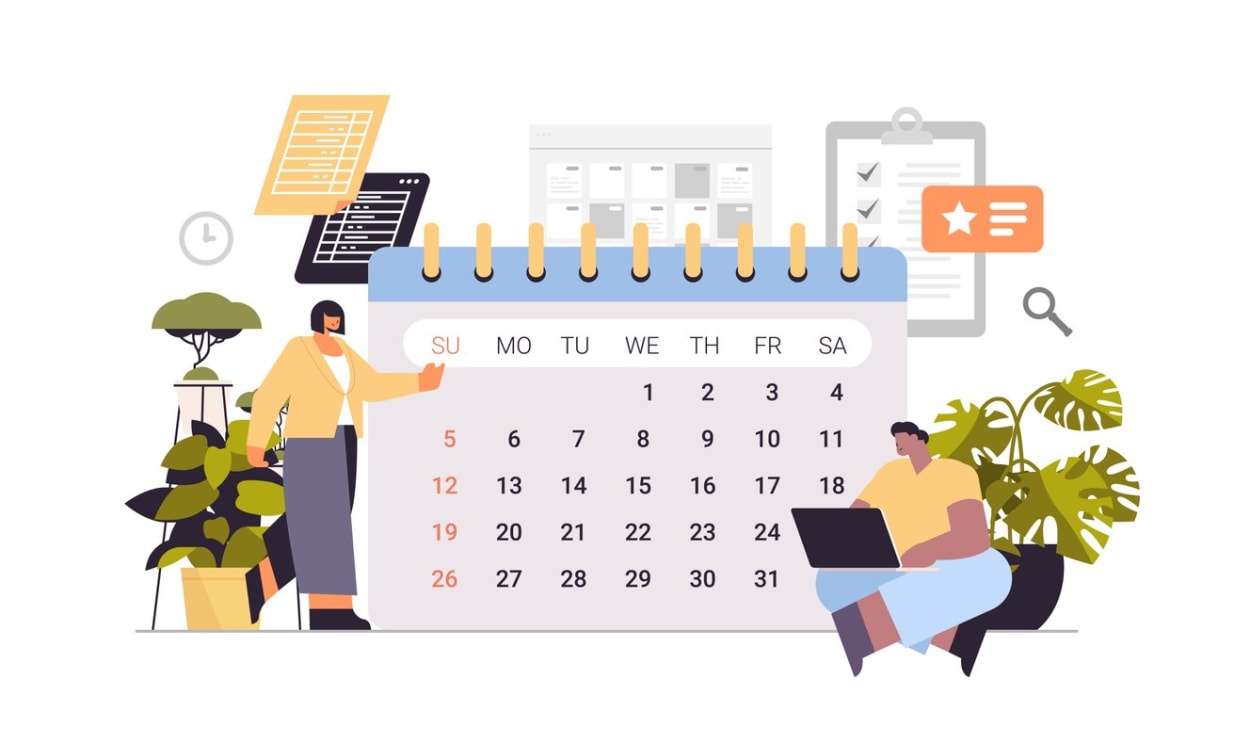
Illustration of two people reviewing a large calendar surrounded by productivity icons.

How Many Working Days Are in a Year? 2026 Breakdown

By Brett Martin

A typical year holds 260 to 262 weekdays and roughly 250 working days once federal holidays come out. In 2026 the figures are 261 and 250, which averages 20.8 working days and about 167 work hours per month. The monthly figures matter more than the annual one, since months range from 19 working days to 22. The annual number is the one everybody quotes. The monthly one is the one that will get you.

Say you scope a project at 30 working days and start it in November. You have 19 working days that month, so you're into December before you've cleared two thirds of it. Start the same project in March and you finish inside the month with a day to spare. Same 30 days of work, same team, two very different answers on when it lands. Neither your calendar nor your project tool will mention this! That's why the month-by-month table below matters more than the annual total. The annual total is for payroll.

Key Takeaways

  • In 2026, there are 261 weekdays and 250 working days after accounting for the 11 U.S. federal holidays observed on weekdays.
  • Your actual working days and annual hours depend on PTO, holidays, and your work schedule, making these totals useful for planning projects, payroll, budgeting, and vacations.
  • A month-by-month breakdown of working days helps individuals and businesses schedule workloads, estimate capacity, and manage time more effectively throughout the year.

How Many Weekdays Are in a Year?

Illustration of person planning at desk with calendar and clock.

2026 is not a leap year, so it has 365 days total. Subtract 104 weekend days (52 Saturdays and 52 Sundays), and you get 261 weekdays. Subtract the 11 federal holidays observed on weekdays, and you land at 250 working days.

The formula: 365 - 104 (weekends) - 11 (federal holidays) = 250 working days

2026 Month-by-Month Working Day Breakdown

Month

Weekdays

Working Days

Work Hours

January

22

20

160

February

20

19

152

March

22

22

176

April

22

22

176

May

21

20

160

June

22

21

168

July

23

22

176

August

21

21

168

September

22

21

168

October

22

21

168

November

21

19

152

December

23

22

176

Total

261

250

2,000

Note: This assumes all 11 federal holidays are observed. Months with federal holidays on weekdays (like November with Thanksgiving and Veterans Day) have fewer working days.

Federal Holidays in 2026

The 11 US federal holidays in 2026, with their observed dates:

Holiday

Date

Day

New Year's Day

January 1

Thursday

Martin Luther King Jr. Day

January 19

Monday

Presidents' Day (Washington's Birthday)

February 16

Monday

Memorial Day

May 25

Monday

Juneteenth

June 19

Friday

Independence Day

July 3 (observed; July 4 falls on Saturday)

Friday

Labor Day

September 7

Monday

Columbus Day

October 12

Monday

Veterans Day

November 11

Wednesday

Thanksgiving

November 26

Thursday

Christmas Day

December 25

Friday

When a federal holiday falls on a Saturday, it's typically observed the preceding Friday. When it falls on a Sunday, it shifts to Monday. In 2026, one holiday moves. July 4 falls on a Saturday, so federal offices observe Independence Day on Friday, July 3. The other ten fall on weekdays and stay put.

How Many Work Hours Are in a Month?

A standard full-time schedule is 40 hours per week across 52 weeks, which comes to 2,080 hours per year as a baseline. Calculated directly from 2026's 261 weekdays at 8 hours each, the gross total is 2,088 hours before any holidays or time off, which averages 174 work hours per month. After federal holidays, the monthly average is about 167 hours.

After subtracting the 11 federal holidays:

  • 2,000 hours (250 working days × 8 hours)

After subtracting a typical 10 vacation days:

  • 1,920 hours (240 working days × 8 hours)

These figures are useful for payroll planning, contractor billing, budget forecasting, and any calculation that depends on available labor hours.

How PTO Affects Your Working Days

Private industry workers receive an average of 11 paid vacation days after one year of service, according to the Bureau of Labor Statistics National Compensation Survey. Sick leave is typically separate, averaging 8 days for workers on fixed-day plans. The number of days you're actually available depends on how much of that you take.

A quick reference:

PTO Days Taken

Net Working Days

Annual Hours (8hr day)

0

250

2,000

5

245

1,960

10

240

1,920

15

235

1,880

20

230

1,840

For employers, these numbers feed into headcount planning, project scheduling, and labor cost estimates. For employees, they're useful for distributing workload, setting realistic deadlines, and planning vacations without creating gaps in coverage.

Practical Uses

Project planning: Knowing you have roughly 250 working days helps set realistic timelines. A project requiring 50 working days consumes a fifth of the year, or about ten calendar weeks once weekends and holidays are counted.

Budget forecasting: Organizations calculating labor costs need working days as a baseline. Payroll runs on actual days worked, not calendar months.

Vacation planning: Spreading 10 vacation days across the year is easier to visualize against a month-by-month breakdown. November is the lightest month at 19 working days. December still runs 22 despite Christmas, but both months sit near holidays, so PTO taken around Thanksgiving or Christmas buys more consecutive time off per day spent.

Contractor and freelance billing: Professionals billing by the day or hour use annual working day counts to estimate annual capacity and set rates.

Tools for Tracking Working Days

Illustration of calendar and scheduling interface with monthly, weekly, and daily view.

Google Calendar: Free, widely used, and easy to set up with recurring schedules, holiday calendars, and time-off blocking. Good for individuals and small teams.

Clockify: Time tracking with scheduling functions, leave tracking, and holiday management. Useful for freelancers and teams that need to track billable hours against working days.

Hubstaff: More robust workforce management including time tracking, scheduling, and productivity monitoring. Better suited for teams managing multiple employees across projects.

A spreadsheet built from the table above covers individual planning. Tools earn their place once several people's schedules have to line up.

Virtual Planning for Remote Teams

For distributed teams, tracking working days is only part of the planning process. Teams also need a shared place to coordinate schedules, discuss upcoming deadlines, and stay aligned around holidays, PTO, and project timelines.

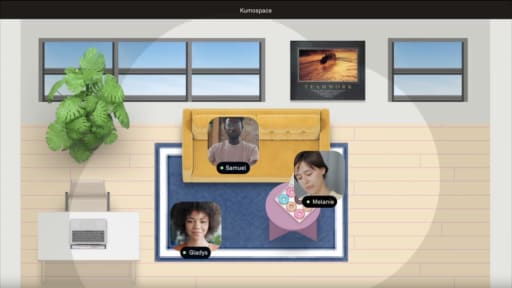
Virtual workspace platforms give distributed teams a persistent place to meet and see who's available, instead of reassembling that context from chat threads and calendar invites every week. Kumospace is a virtual office platform built around that, combining spatial audio, video conferencing, team chat, and screen sharing in one space so schedules, PTO, and deadlines stay visible to everyone planning against them.

How Many Working Days Should You Plan For?

Illustration of people organizing a large clock and calendar.

In 2026 there are 250 working days in the U.S., after removing weekends and the 11 federal holidays observed on weekdays. The count runs from 19 in November to 22 in March, April, July, and December. Subtract your PTO from the monthly figure, not the annual one. A week off in November costs you a lot more of that month than a week off in March.


Frequently Asked Questions

Transform the way your team works from anywhere.

A virtual office in Kumospace lets teams thrive together by doing their best work no matter where they are geographically.

Headshot for Brett Martin
Brett Martin

Brett Martin is the President & Co-Founder of Kumospace. He has spent his career as a serial entrepreneur, either building or investing in technology startups. To date, he has invested in over 60 companies through his fund, Charge Ventures. Brett and his companies have received numerous awards and have been featured in hundreds of media outlets. Outside of tech, Brett founded an indie rock band, started a non-profit, and sailed 6,000 miles on a 30ft sailboat.

Transform the way your team works.