Illustration of a modern office where an employee rushes toward a conference room displaying a video meeting on a large screen.

Offices Space for Rent vs. Virtual: Why Kumospace Wins

By Sammi Cox

Since 2020, office rentals have shifted dramatically. Hybrid work has reduced average lease sizes by about 12.5 percent, flexible terms have replaced multi-year commitments, and virtual offices now serve distributed teams. National vacancy rates are 18.4 percent, though prime locations command record rents while commodity spaces struggle.

This article helps startups, growing tech companies, and engineering teams evaluate physical offices, flexible spaces, and virtual setups. Small AI startups in San Francisco, New York, and London increasingly mix serviced offices with virtual platforms like Kumospace to balance cost, flexibility, and collaboration. The right office strategy directly affects your ability to attract, onboard, and retain top engineering talent.

Types Of Office Space For Rent

  • Traditional leased offices require multi-year commitments and full responsibility for furniture, utilities, and buildout, making them best for enterprises with stable headcount and capital.
  • Serviced offices, coworking spaces, flexible private offices, and virtual HQ platforms like Kumospace offer shorter-term, scalable options with varying levels of privacy, amenities, and digital collaboration for startups and growing teams.
  • Hybrid setups combine a small physical office with remote staff using virtual spaces to reduce real estate needs while maintaining team cohesion.

A Fully-Customizable Office: 100% Yours

When you find the perfect office space, “100 percent yours” means control over layout, branding, and the technology your team relies on, which directly affects focus, collaboration, and productivity for engineering organizations.

  • Layout for engineering teams: Design quiet zones for developers who need deep focus, meeting rooms for sprint reviews and client demos, and open areas for daily standups, separating heads-down work from collaborative spaces.
  • Customization options: Depending on your lease type, you can add logo signage, privacy booths, whiteboard walls, and dedicated server or storage rooms for ML hardware, as colors and furniture choices impact team morale more than most founders expect.
  • Integrating collaboration tools: High-quality conference rooms should have cameras, screens, and microphones optimized for hybrid meetings, whether using Zoom, Google Meet, or Kumospace, to ensure remote employees feel included.
  • Balancing budget and customization: Standard serviced office fit-outs work for early-stage teams, while a 15-person AI team post-Series A might invest in a full design build with focus pods and upgraded infrastructure, matching spending to funding stage.
  • Move-in timeline: Standard serviced offices can be ready in one to seven days, while a customized full-floor project typically takes 60 to 120 days, so plan lease signing around hiring timelines and runway.

Designing An Office For AI & Engineering Teams

Technical teams have specific needs that generic office layouts often miss. Quiet work, focus, and high-bandwidth connectivity are non-negotiable.

  • Desk spacing. Plan for 100 to 150 square feet per person in flexible setups, and 200 to 250 square feet per workstation for teams with multiple monitors, lab equipment, or robotics hardware.
  • Meeting room ratios. Allocate one small huddle room per five to eight engineers for pair-programming and quick syncs, and one larger conference room per 12 to 15 people for all-hands, demos, and investor meetings.
  • Sound management. Invest in acoustic panels, phone booths, and focus rooms to separate noisy standups and calls from deep work areas, which is critical in shared spaces.
  • Infrastructure. Provide redundant high-speed internet of at least 1 Gbps symmetrical, secure network access, VPN configuration, and badge or biometric access for sensitive data, and verify actual speeds during tours.
  • Virtual layer integration. Set up an always-on Kumospace room that mirrors the physical office, allowing remote engineers to join standups, pair-programming, or casual conversations, so distributed freelancers and full-time employees feel equally present.

Key Features Of Modern Office Space For Rent

In 2026, professionals expect plug-and-play readiness, transparent pricing, and the ability to scale as teams grow.

  • Standard inclusions in serviced offices: Furniture, high-speed Wi-Fi, utilities, cleaning, reception, kitchen access, and 24/7 building security should be included in the quoted price without surprise fees.
  • Paid extras: Printing beyond a base allocation, dedicated bandwidth upgrades, call answering, mail forwarding, on-site parking, and catering for sprint reviews or demos may add to your monthly bill.
  • Technology inside the space: Meeting room displays, video-conferencing gear, access control apps, and visitor management systems keep buildings modern and functional.
  • Community and events: Coworking hubs often host lunch-and-learns, founder meetups, and hackathons, which create networking opportunities and support recruiting for engineering teams.
  • Health and wellness features: On-site gyms, bike storage, showers, ergonomic desks, and natural light are increasingly expected by employees in competitive markets.
  • Environmental considerations: LEED-certified buildings, energy-efficient lighting, and proximity to public transit matter to candidates and can reduce operating costs over time.

Virtual Offices, Hybrid Work, And Kumospace

Hybrid and virtual-first teams have grown dramatically. Many companies no longer need full-time physical desks for every person on their roster, and the economics favor leaner footprints combined with digital collaboration.

  • Virtual offices: A mailing address, mail handling, and occasional access to meeting rooms for investor meetings or candidate interviews. Suitable for fully distributed teams that still need to establish a presence in a specific city or country.
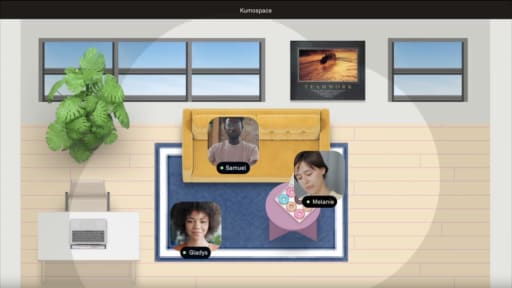
  • Kumospace as a virtual HQ: Kumospace provides spatial audio, persistent rooms, and avatar-based interactions that let distributed teams create a “digital office floor.” Engineers can sit next to each other virtually, hop between rooms for different conversations, and maintain the ambient awareness that remote work typically lacks. It’s more than video calls; it’s a workspace.
  • Combining physical and virtual: A hybrid model might include 8 engineers in a rented office in Austin plus 10 remote engineers logging into the same Kumospace floor daily. Everyone attends standups in the virtual space, and the physical office serves as a collaboration hub for those who need it.
  • Cost effectiveness: A full 30-desk office in a major city might run $15,000–$30,000/month all-in. A smaller 8–10 desk hub plus Kumospace subscriptions for the entire team costs significantly less while maintaining team cohesion. The cost savings can fund additional hires or extend the runway.
  • Candidates and virtual-first companies: Many startups hiring operate fully remote using Kumospace as their virtual HQ. Others choose hybrid setups. Either way, candidates increasingly expect flexibility, and companies that offer it attract stronger talent.

How Much Office Space Do You Need?

Space planning affects both cost and productivity. Get it wrong, and you either waste budget on empty desks or cram engineers into noisy, uncomfortable conditions.

  • Rules of thumb: Flexible office setups typically need 100–150 sq ft per person. Executives or teams with lab equipment, ML hardware, or robotics require 200–250 sq ft per person. These figures include desk space but not shared areas.
  • Concrete example: A 12-person ML team in San Francisco planning 20% growth over 12 months should reserve space for 15–16 desks.
  • Hybrid policies: If the company mandates three days in office and two days remote, not every employee needs a desk. Hot-desking can reduce required square footage by 30–40%.
  • Additional square footage: Account for conference rooms, reception areas, kitchens, focus pods, and storage when leasing a full floor, adding 20–30% beyond desk space.
  • Planning for new hires: Recruiters can add three to five engineers in weeks. Build capacity before signing a lease to avoid being at full capacity too soon.

Calculating Space For Hybrid Teams

When only part of your team is on-site each day, plan capacity around actual presence.

  • Sample hybrid model: A 30-person engineering team with 60% average in-office attendance needs 18–20 desks instead of 30.
  • Scheduling tools: Desk-booking systems like Robin, Envoy, or shared calendars prevent overcrowding on popular days.
  • Dedicated vs. hot desks: Assign permanent desks to roles that require daily on-site presence, while others use hot desks booked as needed.
  • Kumospace as default: On remote days, the team works in the Kumospace virtual office, making the physical space a hub for workshops, interviews, and collaborative sessions.

How Much Does It Cost To Rent Office Space?

Costs vary widely by city, building class, lease type, and services included.

  • Serviced offices: Typically $450–$1,200 per person per month in major US cities, including furniture, utilities, and basic services.
  • Conventional leases: Priced per sq ft per year with 3–10 year commitments; Manhattan Class A ranges $70–$100 per sq ft, secondary markets $35–$55 per sq ft, and Miami averages $57.30 per sq ft versus the US average of $32.72.
  • Additional expenses: Extra charges may include cleaning beyond basics, after-hours security, IT setup, insurance, and local taxes.
  • Scenario comparison: (1) Full-floor lease for 30 engineers $50,000–$80,000/month, (2) serviced office for 15 engineers $10,000–$18,000/month, (3) 8–10 desk hub plus Kumospace $6,000–$10,000/month.
  • Lease alignment: Seed and Series A companies should target 12–24 month flexible terms to match runway and avoid overcommitment.

Budgeting Tips For Startups And Scaleups

Office costs directly affect the runway, so manage them carefully.

  • Percentage of monthly burn: Keep total office expenses within 5–10% of monthly burn for early-stage startups; spending 15% or more signals overcommitment or a misaligned model.
  • Negotiate aggressively: For 2–3 year leases, request rent-free periods, fit-out contributions, and flexible break clauses; landlords in 2026 often have room to negotiate.
  • Test demand first: Use short-term serviced offices or coworking memberships for 3–6 months to validate actual space needs and costs.
  • Delayed fixed commitments: Start with a virtual office and Kumospace while hiring initial engineers, then invest in permanent space once headcount and product-market fit are clearer.

Choosing The Right Office Space For Your Team

The right workspace balances location, flexibility, cost, and team culture. Here’s how to evaluate your options.

  • Location factors: Evaluate commute times for key employees, access to public transit, neighborhood safety, and the local tech ecosystem. Areas like SoMa in San Francisco, Shoreditch in London, and Kreuzberg in Berlin provide networking opportunities and easier recruiting.
  • Flexibility needs: Early-stage startups benefit from short-term leases that allow adding or reducing space quickly. Post-Series B companies with stable headcount can consider multi-year deals for better rates.
  • Culture fit: Tour spaces during peak hours to assess energy levels and noise. Consider whether neighbors such as other startups, law firms, or agencies match your company’s vibe.
  • Technical requirements: Ensure reliable internet, security infrastructure, VPN support, and meeting rooms with proper AV for remote interviews and pair-programming.
  • Hybrid collaboration setup: Confirm that office layout, screens, microphones, and Kumospace access support both local and distributed staff to avoid remote employees feeling second-class.

Workspace decisions and hiring decisions are inseparable; get them right together.

Evaluating Listings And Touring Spaces

Photos and brochures often differ from day-to-day reality. Here’s a checklist for evaluating spaces in person.

  • On-site checks: Test noise levels during peak hours, measure elevator wait times, run internet speed tests, and count available phone booths to see how the space performs daily.
  • Hidden fees to ask about: Clarify cleaning beyond basics, overtime HVAC, after-hours access, meeting room limits, and printing costs by requesting a full fee schedule.
  • Test hybrid meeting experience: Run a mock video call between the office and a remote teammate using Kumospace or another platform to check audio, lighting, and hybrid collaboration support.
  • Request a trial period: Use 1–2 day passes offered by serviced offices or coworking spaces to see how your team functions in the space before committing long term.
  • Inclusive office design: Ensure accessibility, quiet rooms for neurodivergent employees, and fair desk allocation to support retention and reflect equitable workspace principles.

Choosing the right office space goes beyond aesthetics or location; it directly impacts productivity, collaboration, and talent retention. By evaluating physical layout, hybrid technology, cost, and inclusivity, companies can create environments that support both in-person and distributed teams. Flexible and virtual options, combined with thoughtful planning, allow startups and engineering teams to scale efficiently while maintaining a high-quality work experience for every employee.


Conclusion

The landscape of office space has changed permanently. For startups, tech companies, and engineering-heavy teams, success depends on choosing the right mix of physical offices, flexible workspaces, and virtual platforms. Hybrid models, serviced offices, and tools like Kumospace allow teams to stay agile, control costs, and foster collaboration, all while adapting to evolving employee expectations. By aligning office strategy with team needs and company culture, organizations can attract, onboard, and retain top talent, ensuring they remain competitive in a rapidly shifting work environment.

Frequently Asked Questions

Transform the way your team works from anywhere.

A virtual office in Kumospace lets teams thrive together by doing their best work no matter where they are geographically.

Headshot for Sammi Cox
Sammi Cox

Sammi Cox is a content marketing manager with a background in SEO and a degree in Journalism from Cal State Long Beach. She’s passionate about creating content that connects and ranks. Based in San Diego, she loves hiking, beach days, and yoga.

Transform the way your team works.