Most team building activities fail. They create awkward silence, forced laughter, and a collective sigh of relief when they are finally over.
But here is the thing: when you get the right activities in front of the right-sized group, something different happens. People actually connect. They learn how each other thinks. They build the kind of trust that makes projects run smoother and conflicts resolve faster.
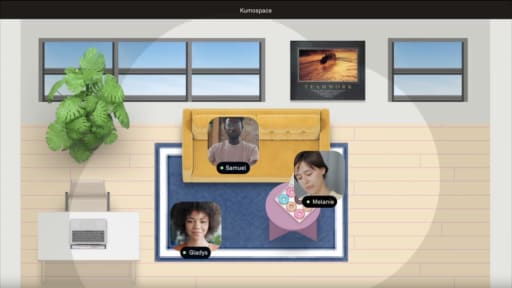
This guide covers 30+ teamwork activities for small groups that have been tested, refined, and proven to create real connection, not just kill time. Whether your team sits in the same conference room or spreads across three time zones using platforms like Kumospace, you will find practical options that work.
Quick Overview: Best Small Group Team Building Ideas (Answer Fast)
These 30+ activities work for teams of 3 to 12 people in 2026, whether you are gathering in an office, running a hybrid session, or meeting in Kumospace’s spatial audio rooms.
Top performers:
- Blind Drawing – Builds communication skills through the gap between what you say and what others hear
- Memory Wall – Deepens connection by surfacing shared experiences from the past 12 months
- Marshmallow Challenge – Reveals team dynamics and the value of rapid prototyping in 18 minutes
- Desert Island Decisions – Surfaces negotiation styles and hidden assumptions through prioritization
- Kumospace Scavenger Hunt – Gets remote teams exploring virtual spaces together with natural conversation
- Office Trivia Night – Builds shared identity through organizational knowledge and inside jokes
- Collaborative Mural – Sparks creative thinking through layered artistic contribution
- Human Knot (Accessible Version) – Classic physical problem solving with modern opt-out options
- Movie Pitch in 20 Minutes – Encourages storytelling, quick thinking, and confidence in presenting
All of these are practical, low-prep, and chosen specifically to build real connection. No trust falls. No forced awkwardness. Just activities that actually work.
For remote and hybrid teams, many of these translate directly to Kumospace’s interactive spaces, where spatial audio lets small groups break off naturally, just like walking to a different corner of the room.
Why Small Group Team Building Matters in 2026
Groups of 4 to 10 people need different activities than a 200-person offsite. Since hybrid work became normal after 2020, many teams rarely see each other in full, and small group team building fills the gap that casual hallway conversations used to cover.
Research and practice suggest this matters because deeper trust forms faster, conflict resolution accelerates, communication becomes clearer, and engagement and retention improve.
One key insight is that recurring micro-sessions of 20 to 40 minutes every 4 to 6 weeks outperform the annual retreat, because lasting team bonding comes from consistent, intentional moments of connection over time.
What Makes a Great Teamwork Activity for Small Groups?
Not every team building game works for every group size. The following characteristics separate effective team building activities from time-wasters:
- Works with 3 to 12 people without leaving anyone on the sidelines
- Everyone participates so there are no observers, no passengers
- Can be explained in under 3 minutes; if it takes longer to explain than to play, skip it
- Fits a realistic time frame of 10 to 45 minutes
- Has a clear learning goal, such as trust, creative problem solving, communication, or team dynamics
- Requires low cost or common household or office materials
- Adapts easily for Kumospace, Zoom, or a physical conference room
Pro tip: Match the activity’s energy level to the time of day and team mood, with high-energy movement working well at 10 AM and calm reflection exercises fitting better at 4 PM on a Friday.
Most of the best activities include a 5-minute debrief so the lessons transfer to real projects, because without that reflection even a great activity stays “just a game.”
Connection-First Icebreakers for Small Groups

These icebreakers work best for 5 to 15 minute kickoffs or when new team members join. They are designed to reduce anxiety, get people talking, and surface something real about each person, all without forcing anyone into the spotlight.
Each of these works both in-person and on virtual platforms like Kumospace, where teammates can wander between rooms asking questions with spatial audio creating natural conversation flow.
Two Truths and a Time-Stamped Story
- Group size: 4–10
- Time: 10–15 minutes
- Materials: None
- Twist: Each person shares two truths and one lie, but ties each to a specific year (like 2010 or 2018)
- Builds: Personal connection and active listening skills
Weather Check-In
- Group size: 3–12
- Time: 5–10 minutes
- Materials: None
- Format: Each person describes their current state using weather metaphors (“I’m partly cloudy with a chance of afternoon focus”)
- Builds: Emotional awareness and empathy within the team
One-Word Check-In
- Group size: 4–15
- Time: 5 minutes
- Materials: None
- Format: Each person picks one word that describes their current relationship with the project or company culture
- Builds: Quick pulse on team energy and honest reflection
Conversation Question Cards
- Group size: 4–10
- Time: 10–20 minutes
- Materials: Prepared cards with 2026 workplace topics (remote work wins, AI concerns, career pivots)
- Builds: Deeper discussion and perspective-sharing
Diversity Bingo Mini
- Group size: 6–12
- Time: 10–15 minutes
- Materials: 3x3 bingo cards with diverse experiences (“Has worked in three countries,” “Speaks more than two languages”)
- Builds: Discovering unexpected common ground
In Kumospace, run “Conversation Question Cards” by placing different question prompts in separate virtual rooms. Group members move their avatars to explore, pick up questions, and discuss with whoever else wanders in.
Icebreaker #1: Interview & Introduce
This classic gets people sharing and listening in equal measure which are both skills that transfer directly to better collaboration.
Format: Pairs interview each other for 3 minutes, then introduce their partner to the group in 60–90 seconds.
Ideal setup:
- Group size: 4–10 people
- Total time: 15–20 minutes for a small team meeting
- Materials: Timer, optional prompt cards
Suggested prompts:
- First job they ever had
- Favorite purchase from 2024
- Dream trip they’d take in 2030
- Proudest work moment
- A skill they want to learn this year
In Kumospace, pairs can move into separate virtual “tables” or “offices” for privacy during the interview phase, then return to a main room for introductions.
Icebreaker #2: Magic Object Box (or Desk Show & Tell)
Participants pick or share a random object and explain how it connects to their role, current project, or personal story.
Offline version: Fill a box with random objects, such as a toy car, a rubber duck, or a vintage postcard. Each person picks one blindly and has 60 to 90 seconds to connect it to something meaningful about their work or life.
Remote version: Each person grabs an item from their home desk and holds it up on camera, or in a Kumospace “lounge” room. They explain why it sits on their desk and what it reveals about them.
Goals: Loosen people up, reveal personal stories, and practice concise storytelling.
Logistics:
- Time: 10–15 minutes
- Max group size: 12 (for everyone to share once)
Collaborative Problem-Solving Games (3–8 People)

Small teams are perfect for problem-solving challenges because you can see natural leadership emerge, watch how decisions get made under pressure, and ensure every team member contributes.
These activities typically run 15–40 minutes and include materials you probably already have.
Marshmallow Challenge – 2026 Version
- Materials: Spaghetti, tape, string, 1 marshmallow
- Time: 18 minutes build + 5 minutes debrief
- Teams of 3–5 build the tallest freestanding structure with marshmallow on top
- Builds: Rapid prototyping, experimentation, problem solving abilities
Egg Drop
- Materials: Straws, tape, paper, cardboard
- Time: 25–30 minutes
- Drop from 2 meters (6.5 feet)
- Teams design a contraption to prevent a raw egg from cracking
- Builds: Creative structure design, resource constraints, collaboration
Helium Stick (Floating Ruler)
- Materials: Lightweight rod or yardstick
- Time: 10–15 minutes
- Everyone places one finger under the stick; group must lower it to the ground together
- Builds: Coordination, patience, non-verbal communication
Blind Square / Perfect Square
- Materials: Blindfolds and a rope loop
- Time: 15–20 minutes
- Blindfolded participants must form the rope into a perfect square
- Builds: Trust, verbal clarity, spatial reasoning
Minefield
- Materials: Soft obstacles in conference room or parking lot
- Time: 15–20 minutes
- One blindfolded person navigates an obstacle course guided only by a partner’s verbal instructions
- Builds: Trust between group members, precise communication
Desert Island Decisions
- Materials: Printed list of 15 items
- Time: 25–30 minutes
- Team must prioritize survival items after a hypothetical plane crash
- Builds: Negotiation, persuasion, listening, compromise
For Desert Island Decisions in Kumospace, use a shared whiteboard where items are dragged into order in real time. The visual manipulation keeps everyone engaged and surfaces disagreements right away.
Activity Spotlight: Marshmallow Challenge
This is one of the most researched team building exercises for revealing how teams actually work together.
Setup:
- Teams of 3–5 people
- Total time: 25 minutes (18 build + 7 debrief)
- Materials per team: 20 dry spaghetti sticks, 1 meter of tape, 1 meter of string, 1 marshmallow
Rules:
- Build a freestanding structure
- Marshmallow must sit on top
- No taping to walls, ceiling, or table
- 18 minutes build time
- Measure height at the end
What the research shows: Teams that test early and iterate outperform teams that plan extensively and place the marshmallow only at the end. This mirrors agile development principles and makes it perfect for project kickoffs in 2026.
Debrief questions:
- What did you try first?
- When did you test your ideas?
- Who led, and how did that affect results?
- What would you do differently with 5 more minutes?
Activity Spotlight: Desert Island Decisions
This activity reveals negotiation styles, hidden assumptions, and how your team handles disagreement.
Setup: The team receives a printed list of 15 items after a fictional “plane crash” scenario set in June 2026. Sample items include:
- Water purifier
- Flare gun
- Satellite phone
- 50 feet of rope
- First-aid kit
- Mirror
- Fishing gear
- Tarp
- Knife
- Matches
Flow:
- Each person ranks items individually (5 minutes)
- Group must agree on a shared ranking (15–20 minutes)
- Debrief about the process (5–10 minutes)
Skills developed: Negotiation, persuasion, listening, compromise, and surfacing assumptions, such as one person assuming rescue is coming while another plans for long-term survival.
In Kumospace, set up a shared board where items are visible and can be dragged into order, and watch how quickly consensus emerges or does not.
Low-Prep Creative & Fun Challenges

Creative challenges reduce stress, reveal fresh sides of colleagues, and get creative juices flowing without requiring expensive materials or extensive planning.
Paper Tower
- Materials: A4/letter paper and tape only
- Time: 15–20 minutes
- Build the tallest freestanding tower
- Builds: Creative problem solving with constraints
Movie Pitch
- Materials: Timer, optional props
- Time: 20 minutes total
- Teams design and pitch a film set in 2030
- Builds: Storytelling, quick thinking, creative thinking
Sales Pitch Remix
- Materials: Random office objects
- Time: 15 minutes
- Pitch a bizarre twist on a real object (2022 desk phone as a wellness device)
- Builds: Persuasion, humor, presentation skills
Collaborative Doodle
- Materials: Paper and markers (or digital whiteboard)
- Time: 15 minutes
- Each person adds to a drawing over 5 rounds
- Builds: Building on others’ ideas, “Yes, and…” mindset
Lego Metaphors
- Materials: Small bag of bricks per person
- Time: 20–25 minutes
- Build something representing your current project challenges
- Builds: Abstract thinking, self-reflection, team connections
Logo Guessing Game
- Materials: Slides with cropped 2024–2025 brand logos
- Time: 10–15 minutes
- Teams compete to identify brands from partial logos
- Builds: Friendly competition, observation skills
For hybrid teams, these run smoothly via shared whiteboards, Google Slides, or Kumospace’s built-in screen share and interactive rooms.
Activity Spotlight: Movie Pitch in 20 Minutes
This fun activity gets teams thinking creatively while practicing storytelling and presentation under pressure.
Structure:
- 3–4 people per team
- 10 minutes to create a movie concept
- 2–3 minutes to pitch to the larger group
- 5 minutes for feedback and voting
Theme prompts:
- “Remote office in 2029”
- “AI teammate gone rogue”
- “Road trip after the 2026 company retreat”
- “First person to live on Mars misses their team meeting”
- “Time traveler visits your office from 2035”
In Kumospace, teams can choose themed rooms that match their movie vibe during the creation phase. The first team to finish their pitch gets to present from the “theater” room.
This builds storytelling ability, confidence in presenting, and encourages creativity, all skills that transfer directly to client presentations and internal proposals.
Trust & Communication Builders (That Aren’t Cringe)
These are updated, respectful versions of classics that work for adults in 2026. Each includes clear safety considerations and opt-out options.
Blind Drawing / Back-to-Back Drawing
- Pairs sit back-to-back; one describes an image while the other draws
- Time: 10–15 minutes with role switch
- No forced physical contact; pure verbal communication exercise
- Builds: Clarity, assumption-checking, communication skills
Minefield (Gentle Version)
- Low-risk obstacles like paper cups or soft foam
- Clear opt-out for anyone uncomfortable with blindfolds
- Partner guides blindfolded person verbally through the obstacle course
- Builds: Trust, precise verbal instructions
Human Knot – Optional & Accessible
- Best for small, informal teams comfortable with physical contact
- Clear consent process before starting
- Non-participation option always available
- Builds: Physical coordination, creative problem solving, laughter
Birthday Lineup (No Talking)
- Participants line up by birthday using only gestures
- Time: 5–10 minutes
- Zero physical contact required
- Builds: Non-verbal communication, logical thinking
Strengths Spotlight Circle
- Each person shares one strength they appreciate about each other team member
- Time: 20–30 minutes for teams of 6–8
- Specific, behavior-based compliments only
- Builds: Recognition, belonging, team spirit
Compliment Hot Seat
- One person sits while other members share specific positive work examples from the past 12 months
- Time: 3–4 minutes per person
- Facilitator ensures examples stay specific and professional
- Builds: Recognition, morale, psychological safety
For communication-focused versions in Kumospace, try guiding an avatar through a maze room with your camera off, or describing images that only you can see while your partner recreates them on a whiteboard.
Activity Spotlight: Blind Drawing Upgrade
This communication exercise reveals the gap between what we think we’re saying and what others actually hear.
Setup:
- Pairs sit back-to-back (or in separate Kumospace rooms)
- One person sees a simple image (icon, logo, or office layout)
- The other draws based only on verbal instructions
- No questions allowed in round one; questions allowed in round two
Time: 10–15 minutes with 2 rounds where partners switch roles
Debrief questions:
- What assumptions did you make that turned out wrong?
- How did the “no questions” rule change your communication?
- How does this mirror real Slack or email communication?
- What would you do differently next time?
Virtual version: The sharer sees a private image on their screen while the drawer uses paper. This works smoothly in Kumospace breakout rooms, where pairs can have private conversations while the facilitator floats between spaces.
Connection-Deepening Activities for Established Teams

These activities work best for teams that already know each other and want to strengthen trust and psychological safety. They require more vulnerability, so use them with clear consent and expectations, without forcing anyone to overshare.
Memory Wall
- Captures highlights from the last 12 months (2024 product launch, March 2025 offsite)
- Uses sticky notes on a physical wall or virtual whiteboard
- Surfaces shared experiences and patterns
- Time: 45–60 minutes
Life Maps
- Each person sketches 5–7 key personal milestones that shaped who they are
- Sharing is voluntary and self-directed
- Reveals context and background that deepens empathy
- Time: 30–45 minutes
Coat of Arms
- Quadrants for: personal values, team values, proudest win, vision for end of 2026
- Each person creates and presents their shield
- Time: 40–50 minutes
Strength-Building Circle
- Peers call out specific strengths tied to real projects
- Format: “I noticed your strength in [skill] when you [specific example]”
- Time: 25–35 minutes
Shared Playlist Session
- Each person adds one song from 2010–2026 that represents them
- Brief explanation of why this song matters
- Can be done async before a sync session
- Time: 20–30 minutes for sharing
These work well as 60–90 minute quarterly rituals in a meeting room or a dedicated Kumospace “retreat floor” where the team gathers with intention.
Activity Spotlight: Memory Wall for the Last 12 Months
This activity surfaces shared experiences and creates a visual record of what the team has been through together.
Timeline focus: The previous 12 months, for example July 2024 to June 2025, keeps examples concrete and recent.
Materials:
- Sticky notes and markers
- Large wall or virtual whiteboard
- Sections labeled: Wins, Challenges, Funny Moments, “Proud of You” Notes
Flow:
- 10 minutes individual writing (everyone creates 5–10 notes)
- 15 minutes posting and grouping similar themes
- 20 minutes group discussion about patterns and takeaways
Kumospace version: Use a virtual whiteboard on a “project lounge” floor where everyone adds sticky-style notes in real time, and the facilitator can move notes into clusters as themes emerge.
This activity often surfaces forgotten wins and strengthens appreciation for what the entire team has accomplished together.
Virtual & Hybrid Small Group Activities with Kumospace
Kumospace is a spatial video platform with customizable virtual offices, floors, and rooms. Unlike grid-based video calls, it lets people move around, form natural small groups, and have side conversations, much like a real office.
This makes it ideal for 4 to 12 person team building events where you want the spontaneity that virtual teams usually miss.
Kumospace Scavenger Hunt
- Teammates race to find hidden objects or clues across virtual floors
- Uses Kumospace’s customizable spaces to plant items in different rooms
- Time: 20–25 minutes plus debrief
Virtual Office Thief
- Participants share screenshots of their home desks
- Team guesses which desk belongs to which person
- Fun way to learn about colleagues’ personal spaces
- Time: 15–20 minutes
Chat Waterfall Icebreaker
- Everyone types a response to a prompt but doesn’t hit send until the facilitator counts down
- All answers appear simultaneously
- Avatars then gather in a central lounge to discuss surprises
- Time: 10–15 minutes
Emoji Check-In Tour
- Different rooms are labeled with moods (☀️ Energized, ☁️ Tired, 🌈 Excited)
- People move their avatar to the room that matches their current state
- Natural group discussions form in each room
- Time: 10 minutes
Remote Change Three Things
- Pairs face each other on camera, then turn away and change three things about their appearance
- Partner guesses what changed
- Uses virtual backgrounds and avatar changes for additional twists
- Time: 10–15 minutes
Kumospace Puzzle Rooms
- Each room holds a different riddle or mini-challenge
- Small teams move through rooms together, solving each before moving on
- Time: 25–30 minutes
Scheduling tip: Set up a recurring monthly Kumospace team-building hour to keep remote coworkers connected. Consistency is more effective than intensity for building lasting team connections.
Activity Spotlight: Kumospace Scavenger Hunt
This activity combines exploration, collaboration, and the fun of competition in a virtual space.
Setup: The facilitator plants virtual objects, notes, or images in different rooms/floors ahead of time. Examples:
- A “2065 Goals” poster in the conference room
- A hidden company mascot in the kitchen
- A riddle written on the whiteboard in the brainstorm room
- A photo of the CEO’s pet in the lounge
Rules:
- Two teams (or two equal teams of 3–4) receive a digital list of 10–15 items or clues
- Teams navigate the space together
- Screenshot or react at each find
- Return to a central lounge within 20–25 minutes
- First team back with all items wins
Outcomes:
- Reinforces familiarity with the virtual office layout
- Boosts spontaneous conversation as avatars bump into each other
- Encourages collaboration and role division (“You check the kitchen, I’ll check upstairs”)
Follow-up: 5–10 minute debrief where teams share their trickiest clue and one thing they learned about a fellow student of the virtual space (or fellow team member).
Quick Planning Checklist: Choosing the Right Activity
Here’s a practical checklist for managers and team leads planning a session in the next 2–4 weeks:
|
Step |
Details |
|
Clarify goal |
Trust-building? Creativity? Onboarding new team members? |
|
Confirm group size |
Most activities work best with 4–10 people |
|
Set time limit |
20–45 minutes for activities, plus 5–10 for debrief |
|
Check accessibility |
Any mobility, sensory, or comfort considerations? |
|
Decide format |
In-person, Kumospace, or hybrid? |
|
Gather materials |
1–2 days before the session |
|
Plan debrief questions |
3–4 questions that connect activity to real work |
|
Assign facilitator |
Rotate monthly (July 2026 to one person, August to another) |
Track what works by keeping a simple log of activities, how they were rated, and any feedback. Over time, you will build your team’s own “connection playbook” of go-to activities.
Encourage team members to suggest activities as well, because ownership creates buy-in and the next facilitator might bring fresh energy.
Conclusion: Turning Small Group Activities into Real Culture Change
Consistent small group team building, whether in a meeting room or a Kumospace virtual office, creates lasting connections that one-off fun events cannot match. The successful team is not the one with the biggest retreat budget. It is the one that regularly invests a few minutes in activities that strengthen trust, improve communication, and make people actually want to collaborate.
The key is mixing it up: start with lighter icebreakers, move to problem-solving games, add creative challenges, and occasionally go deeper with reflection activities. This variety keeps sessions fresh and reaches different team members in different ways.
Your next step is to pick one 20 to 30 minute activity from this article and schedule it in the next seven days with your team. Do not overthink it. The best way to improve team dynamics is to start.
Then experiment by testing one in-person and one Kumospace-based activity this quarter. Gather feedback on what truly helped people feel more connected and use that data to shape your next team retreat or weekly meeting ritual.
Real connection does not happen by accident. It happens when someone decides to make it a priority and then follows through. That someone can be you, starting this week.
Frequently Asked Questions
Problem-solving challenges like The Human Knot or escape rooms are highly effective, and high-engagement activities like Shared Storytelling or group cooking classes build personal connections in a low-pressure environment.
Virtual Coffee Chats with randomized breakout rooms, digital scavenger hunts, and Show and Tell sessions where both in-office and remote members share meaningful objects maintain rapport and connection.
Most effective sessions last 45 to 90 minutes, allowing time to move past initial awkwardness without causing meeting fatigue, while deeper bonding or strategic retreats may take a half-day and daily culture hits should stay under 20 minutes.
Quick options include Two Truths and a Lie for personal discovery, Desert Island to reveal group priorities, and Picture My Life, where members share a recent work-appropriate photo and give a 30-second backstory.
Exercises that mirror real-work challenges, such as Post-Mortem Roleplays or Cross-Departmental Brainstorming, improve collaboration, while activities without clear purpose feel like forced fun, so always debrief to connect the experience to daily workflows.