Business presentation with charts and graphs, symbolizing defining and analyzing target audiences.

Types of Target Audiences and How to Define Yours

By Sammi Cox

Knowing who you're talking to changes everything about how you communicate. The messaging that resonates with a first-time founder evaluating project management tools sounds nothing like the messaging that lands with an enterprise CTO consolidating their tech stack. Both might end up buying the same product, but the path that gets them there, the language they respond to, and the problems they need solved first are fundamentally different.

That difference is why understanding the types of target audiences matters far beyond the initial market research phase. Audience segmentation informs your content strategy, your product roadmap, your ad spend allocation, and the way your team talks about what you're building. Get it wrong, and you end up with generic messaging that speaks to everyone in theory and persuades no one in practice.

This guide breaks down the major audience types, explains how to identify your core audience, and provides concrete examples of target audience descriptions you can adapt for your own marketing and product strategy.

Key Takeaways

  • Target audiences can be segmented by demographics, psychographics, behavior, firmographics, and needs, and the most effective strategies layer multiple types together.
  • Your core audience is the narrowest, highest-value segment that drives the majority of your revenue and should receive the most focused messaging and resources.
  • Effective target audience descriptions go beyond surface-level demographics to include motivations, pain points, decision-making context, and preferred communication channels.
  • Understanding audience types helps marketing teams write better copy, helps product teams prioritize features, and helps project managers align cross-functional work around clear user personas.
  • Remote and hybrid teams can use virtual office platforms like Kumospace to keep cross-functional audience insights flowing through casual conversation rather than waiting for formal research readouts.

Why Audience Segmentation Still Matters in a Data-Rich World

The temptation in a world of granular analytics is to skip audience definition entirely and let the data tell you who's converting. But conversion data tells you who already found you. It doesn't tell you who should have found you and didn't, or who visited but left because the messaging didn't resonate with their specific situation.

Audience segmentation provides the strategic layer that raw data can't. It forces you to articulate who you're building for, what those people care about, and how your product fits into their world. Without that articulation, marketing teams default to feature lists instead of benefit-driven messaging. Product teams build for the loudest customers instead of the most valuable ones. Project managers scope work without a clear picture of who the end user actually is.

The types of target audiences you define become the shared vocabulary your entire organization uses to make decisions. When someone asks "who is this for?" in a product review or a campaign kickoff, a well-defined audience framework gives everyone the same answer.

The Major Types of Target Audiences

Audience segmentation isn't one-dimensional. The most useful frameworks layer multiple types of segmentation together to create a nuanced picture of who you're reaching and how to reach them. Here are the primary types and how each one applies in practice.

Demographic Audiences

Demographic segmentation groups people by measurable personal characteristics like age, gender, income level, education, occupation, and family status. This is the most traditional form of audience targeting, and the one most marketers learn first.

Demographic targeting works well as a starting filter because the data is widely available and easy to act on across most advertising platforms. A B2B software company might target professionals aged 28 to 45 with household incomes above a certain threshold who hold manager-level titles or above. A consumer brand might segment by life stage, targeting new parents or recent college graduates.

The limitation of demographics alone is that they tell you what someone looks like on paper without telling you what motivates their decisions. Two 35-year-old engineering managers with similar incomes might have completely different priorities when evaluating collaboration tools. One cares about integrations with their existing stack. The other cares about ease of onboarding for non-technical team members. Demographics get you in the right neighborhood, but you need additional layers to find the right door.

Psychographic Audiences

Psychographic segmentation goes deeper than demographics by grouping people according to their values, attitudes, interests, lifestyle choices, and personality traits. This is where audience targeting shifts from "who they are" to "how they think."

For marketing teams, psychographic insights unlock messaging that feels personal rather than generic. A project management tool marketed to someone who values efficiency and process optimization sounds different from the same tool marketed to someone who values creativity and flexibility, even if both people hold the same job title. The product is the same. The framing that makes it compelling changes entirely.

Psychographic data is harder to collect than demographic data, but it's available through customer interviews, survey research, social media analysis, and behavioral patterns in your product analytics. The investment in gathering it pays off in conversion rates because psychographic alignment between your messaging and your audience's worldview is one of the strongest predictors of engagement.

Behavioral Audiences

Behavioral segmentation groups people based on their actions rather than their attributes. This includes purchase history, product usage patterns, content consumption habits, email engagement, website behavior, and how they interact with your brand across channels.

Behavioral targeting is particularly powerful for product and marketing teams because it reflects actual intent rather than inferred interest. Someone who has visited your pricing page three times in the past week is a different audience than someone who read a single blog post and bounced. The first person needs a compelling reason to convert right now. The second needs nurturing content that builds awareness and trust over time.

Engineering teams building product experiences also benefit from behavioral segmentation. Understanding how different user segments navigate your product, which features they adopt first, and where they drop off informs everything from onboarding flows to feature prioritization. When the data shows that a specific behavioral cohort churns at twice the rate of others, that's a product problem worth investigating before it becomes a retention crisis.

Firmographic Audiences

Firmographic segmentation applies specifically to B2B contexts and groups organizations by characteristics like company size, industry, revenue, location, growth stage, and technology stack. Think of firmographics as demographics for companies rather than individuals.

This type of targeting is essential for B2B marketing and sales teams that need to allocate resources efficiently. A virtual office platform selling to a 15-person startup has a completely different sales motion than the same platform selling to a 5,000-person enterprise. The startup needs a quick setup and low commitment. The enterprise needs security certifications, admin controls, and a procurement-friendly pricing structure. Firmographic segmentation ensures your outreach, content, and product positioning match the realities of each company type.

For project managers coordinating go-to-market efforts, firmographic segments often map directly to workstreams. A launch targeting mid-market SaaS companies involves different messaging, different channels, and different success metrics than a launch targeting healthcare enterprises. Defining these segments early keeps cross-functional teams aligned on who they're building for.

Needs-Based Audiences

Needs-based segmentation groups people by the specific problem they're trying to solve, regardless of their demographics, psychographics, or company profile. This approach starts with the job to be done rather than the characteristics of the person doing it.

A team searching for "how to improve remote team communication" has a different need than a team searching for "how to reduce meeting overload," even if both end up evaluating the same category of tools. The first team needs features that increase connection and visibility. The second needs features that replace meetings with lighter-touch interactions. Needs-based segmentation lets you speak directly to each motivation with content and product positioning that feels specifically relevant.

This is often the most actionable type of segmentation for content marketing because it maps directly to search intent. Each distinct need represents a potential content pillar, landing page, or ad group that can address a specific audience with precision.

How to Identify Your Core Audience

Your core audience is the segment within your broader target market that drives the most value for your business. These are the people or companies who convert at the highest rate, retain the longest, generate the most revenue, and refer others most frequently. Every business has multiple audience segments, but the core audience is the one you'd build around if you could only serve one group.

Identifying your core audience requires looking at your existing customer base with a critical eye. Start by analyzing who your best customers are, not just who buys the most, but who gets the most value from your product and stays the longest. Look for patterns in their demographics, firmographics, behaviors, and the problems they were solving when they found you. The overlap in those patterns is your core audience.

For early-stage companies without a large customer base, core audience identification involves more hypothesis testing. Talk to your first 20 or 30 customers and ask them what problem brought them to your product, what alternatives they considered, and what made them choose you. The answers will cluster around a few recurring themes, and those themes define your core audience until you have enough data to refine further.

Once identified, your core audience should receive disproportionate attention in your messaging, content strategy, and product development. This doesn't mean ignoring other segments. It means being deliberate about where you invest your most creative energy and your highest-quality resources.

Examples of Target Audience Descriptions That Actually Work

A target audience description is only useful if it's specific enough to guide decisions. Vague descriptions like "tech-savvy professionals aged 25 to 45" don't give your copywriter, product designer, or campaign manager enough to work with. The best examples of target audience descriptions include demographic and firmographic basics, psychographic motivations, behavioral signals, and the specific problem the audience is trying to solve.

Here's a target audience description example for a virtual office platform targeting distributed engineering teams: "Engineering managers at Series A through Series C SaaS companies with 20 to 100 employees, where at least half the team works remotely. They value async-first communication but struggle with the loss of spontaneous collaboration that used to happen in a physical office. They've tried Slack huddles and scheduled Zoom calls, but find both insufficient for maintaining team cohesion. They're evaluating virtual office tools as a way to recreate ambient presence without adding more meetings to their team's calendar."

Here's another target audience description example for the same product, targeting a different segment: "Marketing directors at mid-market companies with hybrid work policies, managing teams of 8 to 15 people split between an office and remote locations. They're frustrated by the communication gap between in-office and remote team members, which leads to remote employees being left out of informal decisions and creative brainstorms. They need a collaboration environment that puts remote and in-office team members on equal footing without requiring everyone to adopt a complex new tool."

Notice how both descriptions include who the person is, what they value, what they've already tried, and what specific friction they're experiencing. This level of detail gives every team in your organization, from marketing to product to customer success, a concrete picture of who they're serving.

Putting Audience Insights to Work Across Your Organization

Defining your types of target audiences is only valuable if the insights make it into the daily decisions your team makes. Too often, audience research lives in a strategy deck that gets presented once and never referenced again. The teams that get the most out of their segmentation work are the ones that keep audience context alive in ongoing conversations, not just in formal documentation.

For remote and hybrid teams, sharing audience insights needs to be fast and easy. A product manager should be able to quickly share customer interview takeaways with marketing, and a marketing lead should be able to flag emerging audience trends to product teams before they affect strategy. Fast informal communication channels make this possible. Teams using Kumospace often find this happens more naturally because coworkers can jump into quick conversations, overhear relevant discussions, and collaborate the way they would in a physical office.

The goal is to make audience understanding part of daily operations instead of a static planning document. When teams consistently understand who their audience is and what they care about, everything improves, from messaging and campaigns to product decisions and project planning.


How Kumospace Helps Teams Share Audience Insights Faster

For remote and hybrid teams, audience research often gets trapped inside documents, Slack threads, or scheduled meetings. A product manager finishes customer interviews, but the insights do not reach marketing until the next weekly sync. A sales lead notices a new buying objection, but product teams do not hear about it until the quarter is already moving in a different direction.

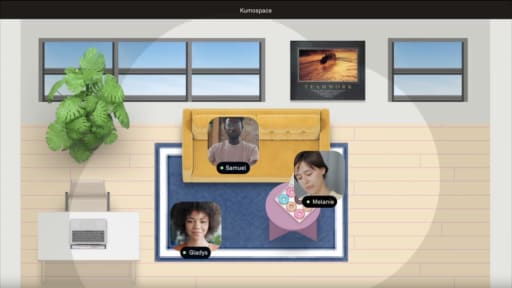
This is where virtual office platforms like Kumospace become valuable. Persistent shared spaces make cross-functional collaboration feel more natural and less dependent on formal meetings. Teams can jump into quick conversations, share feedback in real time, and resolve questions before small disconnects turn into larger strategy problems.

Features like spatial audio, virtual offices, team rooms, screen sharing, and lightweight drop-in conversations help recreate the kind of spontaneous collaboration that often disappears in distributed work environments. Instead of waiting for another scheduled readout, marketing, product, sales, and customer success teams can continuously exchange audience insights as they emerge.

For companies refining messaging, testing positioning, or building around evolving customer needs, that faster feedback loop can make audience understanding part of daily operations instead of a static research exercise.

Frequently Asked Questions

Transform the way your team works from anywhere.

A virtual office in Kumospace lets teams thrive together by doing their best work no matter where they are geographically.

Headshot for Sammi Cox
Sammi Cox

Sammi Cox is a content marketing manager with a background in SEO and a degree in Journalism from Cal State Long Beach. She’s passionate about creating content that connects and ranks. Based in San Diego, she loves hiking, beach days, and yoga.

Transform the way your team works.